
QUALITY
OP Del Pesce coordinates and enhances an integrated fish-farming chain, entirely controlled by the
from production to distribution. Thanks to a structured organization and production specifications
Shared, it guarantees product uniformity, continuity of supply, and quality standards
high. Operational management is oriented towards maximum efficiency, freshness of
product and full traceability along the entire value chain.
THE CERTIFICATIONS
A concrete instrument of assurance for customers and consumers. Standards such as IFS Food, GlobalG.A.P. and SQN Sustainable Aquaculture attest to compliance with strict requirements regarding food safety, sustainability and animal welfare. Independent audits and periodic verifications ensure transparency,
reliability and compliance with the highest standards of the retail sector.

GLOBAL GAP
Global Gap An international standard that defines breeding practices, ensuring a responsible approach throughout the entire chain. It covers environmental aspects, site management, food safety, animal welfare, and working conditions. It includes controls on traceability, feeding, and production processes, ensuring a product that complies with globally recognized requirements.

IFS FOOD
Lo IFS Food standard Certification recognized by GFSI It assesses food safety and quality in processing and packaging processes. It is based on rigorous audits that analyze hygiene, risk management, traceability, food defense, and regulatory compliance.

ANTIBIOTIC FREE
Certification Antibiotic-free which attests to the absence of the use of antibiotics throughout the entire breeding cycle. It is based on health prevention systems, control of environmental conditions, and biosecurity practices. The goal is to reduce the risk of antibiotic resistance and offer a more natural, safe product that meets consumer expectations.

SQN
SQN – Sustainable Aquaculture National standard promoted by the MASAF that certifies fish products obtained in compliance with strict environmental, social and production criteria. It includes control of breeding densities, water quality, animal welfare, responsible use of feed, and complete traceability, ensuring sustainability and high quality of the final product.
HATCHERY
ANTIBIOTIC FREE
The farms are managed according to an “Antibiotic Free” standard. Prevention is based on biosecurity plans, genetic selection, health monitoring, and controlled environmental conditions. This approach reduces the risk of diseases and contributes to combating antibiotic resistance, ensuring a safe, natural product that complies with the most advanced industry standards. As part of disease prevention, an agreement was signed in 2025 between Op Del Pesce and IZSLT for the adoption and testing of innovative health protocols.


ANIMAL WELL-BEING
Animal welfare is at the heart of the production process. Farms operate with controlled densities, kept within strict limits of approximately 15 kg/m³, ensuring ample space and a high water exchange rate compared to industry standards. Continuous monitoring of environmental parameters and balanced feeding reduce stress and prevent diseases, promoting natural growth and ensuring high quality standards for the final product.
NUTRIZIONE CONTROLLATA
Nell’alimentazione dei nostri pesci possono essere impiegate anche Proteine Animali Trasformate (PAT) provenienti da suini e avicoli, quindi esclusivamente da specie non ruminanti, nel pieno rispetto della normativa europea. Le PAT derivano da sottoprodotti di animali idonei al consumo umano e rappresentano una fonte proteica di elevato valore nutrizionale, contribuendo al recupero efficiente delle risorse e a un modello di economia sempre più circolare. Il loro utilizzo in acquacoltura avviene secondo rigorosi requisiti di sicurezza, tracciabilità e controllo lungo tutta la filiera.
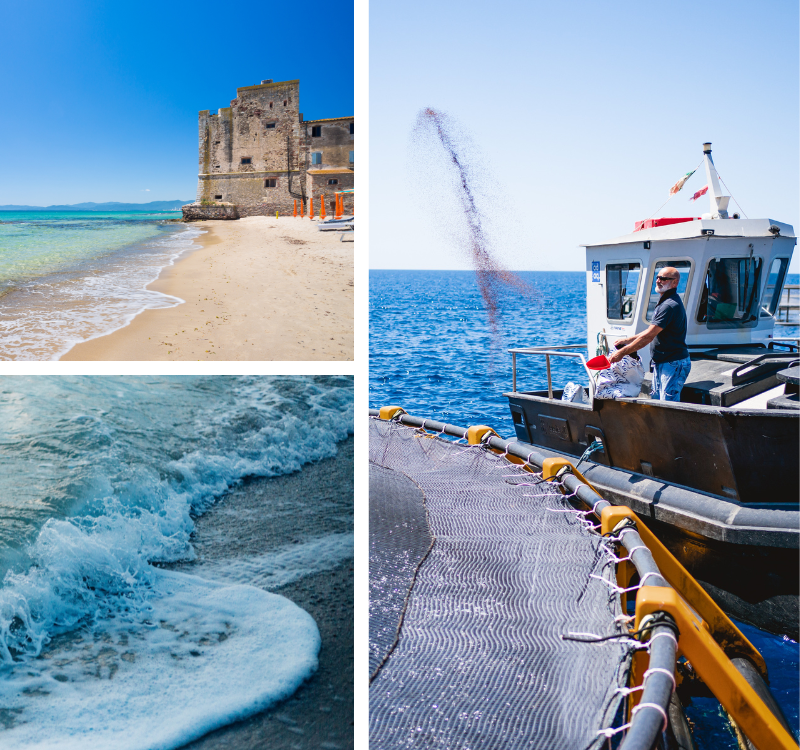
QUALITYÀ
OP Del Pesce coordinates and enhances an integrated fish production chain, fully controlled from production to distribution. Thanks to a structured organization and shared production specifications, it guarantees product uniformity, continuity of supply, and high quality standards. Operational management is oriented towards maximum efficiency, product freshness, and full traceability throughout the entire value chain.

OUR CERTIFICATIONS
GLOBAL GAP
An international standard that defines good farming practices, ensuring a responsible approach throughout the entire supply chain. It covers environmental aspects, site management, food safety, animal welfare, and working conditions. It includes controls on traceability, feeding, and production processes, ensuring a product that meets globally recognized requirements.
IFS FOOD
Lo IFS Food standard Certification recognized by GFSI It assesses food safety and quality in processing and packaging processes. It is based on rigorous audits that analyze hygiene, risk management, traceability, food defense, and regulatory compliance.
ANTIBIOTIC FREE
Certification attesting to the absence of the use of antibiotics throughout the entire breeding cycle. It is based on health prevention systems, control of environmental conditions, and biosecurity practices. The goal is to reduce the risk of antibiotic resistance and offer a more natural, safe product that meets consumer expectations.
SQN
National standard promoted by the MASAF that certifies fish products obtained in compliance with strict environmental, social and production criteria. It includes control of breeding densities, water quality, animal welfare, responsible use of feed, and complete traceability, ensuring sustainability and high quality of the final product.
ANTIBIOTIC-FREE LIVESTOCK
The farms are managed according to an “Antibiotic Free” standard. Prevention is based on biosecurity plans, genetic selection, health monitoring, and controlled environmental conditions. This approach reduces the risk of diseases and contributes to combating antibiotic resistance, ensuring a safe, natural product that complies with the most advanced industry standards. As part of disease prevention, an agreement was signed in 2025 between Op Del Pesce and IZSLT for the adoption and testing of innovative health protocols.
ANIMAL WELL-BEING
Animal welfare is at the heart of the production process. Farms operate with controlled densities, kept within strict limits (up to approximately 15 kg/m³), ensuring ample space and a high water turnover compared to industry standards. Continuous monitoring of environmental parameters and balanced feeding reduce stress and prevent disease.
pathologies, favoring natural growth and ensuring high quality standards for the final product.
NUTRIZIONE CONTROLLATA
Nell’alimentazione dei nostri pesci possono essere impiegate anche Proteine Animali Trasformate (PAT) provenienti da suini e avicoli, quindi esclusivamente da specie non ruminanti, nel pieno rispetto della normativa europea. Le PAT derivano da sottoprodotti di animali idonei al consumo umano e rappresentano una fonte proteica di elevato valore nutrizionale, contribuendo al recupero efficiente delle risorse e a un modello di economia sempre più circolare. Il loro utilizzo in acquacoltura avviene secondo rigorosi requisiti di sicurezza, tracciabilità e controllo lungo tutta la filiera.